So, OpenAI has signed yet another megabucks deal,
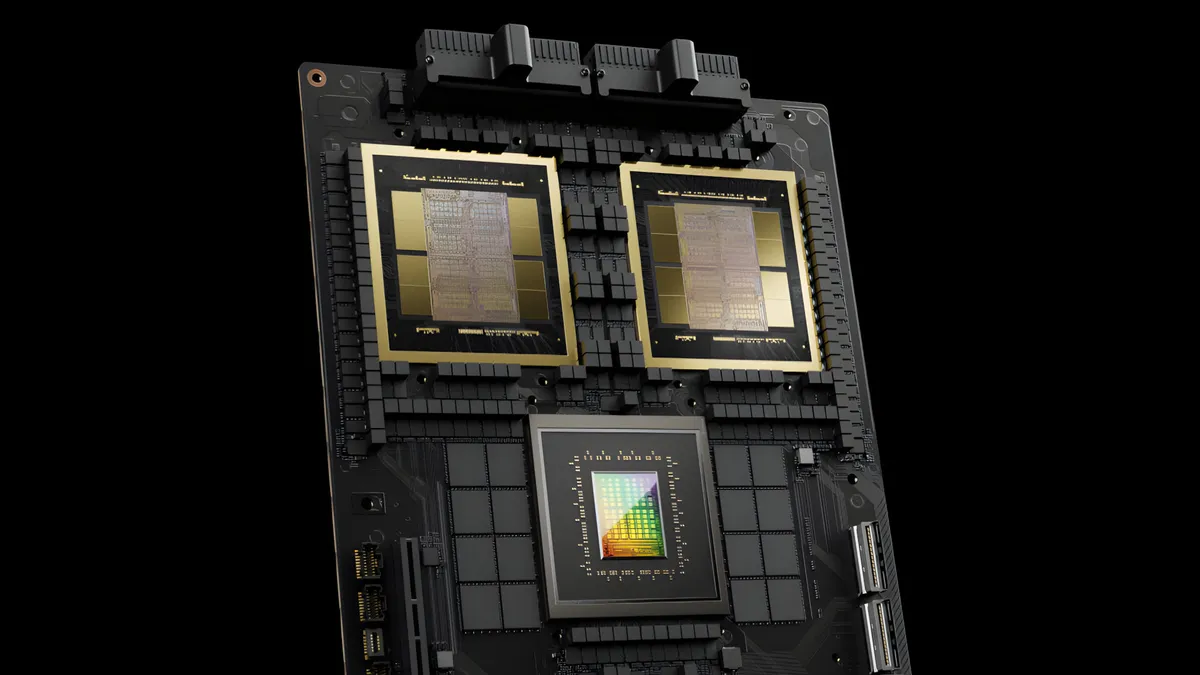
From a technological perspective, the interesting bit is that the hardware is OpenAI designed. "OpenAI will design the accelerators and systems, which will be developed and deployed in partnership with Broadcom. By designing its own chips and systems, OpenAI can embed what it’s learned from developing frontier models and products directly into the hardware, unlocking new levels of capability and intelligence," the announcement says.
But when the AI bubble will burst and what the impact will be, that's another question. Many observers are taking previous bubbles as examples to prove that, actually, a burst AI bubble won't be so bad.
Keep up to date with the most important stories and the best deals, as picked by the PC Gamer team.
No less a figure than his royal Amazoness, Jeff Bezos, has explained that just because there's an AI bubble and just because it's bound to burst, that . He uses the example of the 1990s biotech bubble that burst, leaving scores of companies as smouldering wrecks but also a legacy of several new lifesaving drugs.
The other obvious example is the dotcom boom of the late '90s and '00s and the associated $500 billion fibre optic roll out. , 200 companies went pop when that bubble burst. But on those ashes the modern internet was built.
So, the argument here is that, yes, there's an AI bubble, yes it's going to burst, yes a lot of companies will go to the wall and incalculable quantities of investment capital will go up in smoke. But despite all that, AI will still be a revolution, just as the internet was still a revolution regardless of the dotcom crash.
Indeed, some observers including Bezos argue that the real revolution won't be the likes of OpenAI and Nvidia, in other words, the companies whose entire being is all about AI technology, "AI first" companies in Bezos' words. It will be the fact that AI will impact literally every company in the world.
, "AI is real and it is going to change every industry." He describes AI as a, "horizontal enabling layer" that's going to make quality and productivity improve at literally every company on the planet.
Of course, that's the end game. In the meantime, there's the minor matter of all the money flying around in these megabucks deals. , OpenAI's plans just with Oracle, Nvidia and AMD will cost more than $1 trillion by the end of the decade and it's g2g1bet not clear where the money is coming from.
As linked above, Bloomberg has a handy diagram that tracks what's increasingly seen as worryingly circular series of deals with money going, to take just one example, from Nvidia to OpenAI, with the latter in turn then purchasing hardware from the former.
It's not hard to see from deals like that how the whole house of cards could come tumbling down. The only real question, it increasingly seems, isn't if the AI bubble will burst, but what the impact will be when it does. As with other "industrial" bubbles, it won't necessarily be all bad news. There will be an awful, awful lot of installed AI hardware and it will be useful for something. What, exactly, that use will be and what the economic fallout of such huge titans of today's stock markets losing a ton of cash and value will be remains to be seen.

1. Best gaming chair:
2. Best gaming desk:
3. Best gaming headset:
4. Best gaming keyboard:
5. Best gaming mouse:
6. Best PC controller:
7. Best steering wheel:
8. Best microphone:
9. Best webcam:
👉👈